
 All vikis
Ocarina of Time 3D
The Legend of Zelda: Ocarina of Time 3D is the 2011 Nintendo 3DS remake of Ocarina of Time, developed by Grezzo with Nintendo and released on Jun 16, 2011 in Japan and Jun 19, 2011 in North America. It rebuilt the graphics at 30 frames per second and added gyro aiming, touch-screen items, Sheikah Stone hint videos, a Boss Challenge and a mirrored Master Quest.
The Legend of Zelda: Ocarina of Time 3D is the Nintendo 3DS remake of Ocarina of Time, developed by Grezzo with Nintendo and released on Jun 16, 2011 in Japan and Jun 19, 2011 in North America. Nintendo of America's "New Features" trailer of May 27, 2011 shows its three headline additions on a 3DS: "Hint Movies" watched in a Sheikah Stone, "Touch Screen Items" such as the Iron Boots worn in the Water Temple, and a "Boss Challenge" against King Dodongo with a timer. The world, story and dungeons are those of the 1998 Nintendo 64 original, rebuilt with new models and textures, and a mirrored Master Quest unlocks after the main quest. It sold 6.44 million copies by Dec 2022, and it is not the same game as the Nintendo Switch 2 remake of The Legend of Zelda: Ocarina of Time, which is due Nov 5, 2026.
Quick facts
| Platform | Nintendo 3DS |
| Developer | Grezzo, with Nintendo EAD Tokyo |
| Publisher | Nintendo |
| Producers | Eiji Aonuma (Nintendo); Koichi Ishii, Grezzo's CEO, as development producer |
| Announced | E3 2010 |
| Japan | Jun 16, 2011 |
| Europe | Jun 17, 2011 (Jun 16 in some sources) |
| North America | Jun 19, 2011 |
| Australia | Jun 30, 2011 |
| Frame rate | 30 frames per second (the Nintendo 64 game ran at 20) |
| New features | Gyro aiming, touch-screen items and ocarina, Sheikah Stone Visions, Boss Challenge and Boss Gauntlet, Master Quest |
| Metacritic | 94 |
| Sales | 6.44 million (CESA, as of Dec 2022) |
Who made it
Nintendo asked Grezzo, the studio led by Koichi Ishii, to handle production of the 3DS version, Iwata Asks records, with Eiji Aonuma as producer for Nintendo and Ishii as development producer; Nintendo EAD Tokyo gave additional support. IGN's review of Jun 17, 2011 credits "both developers, Nintendo and Grezzo" and stresses that it is "not just a simple port": the locations and dungeon layouts are the same, but textures, character models and animations were redone, with Grezzo aiming to match the original concept art for Ocarina of Time. The 3DS game's credits list Grezzo's Shun Moriya, Mikiharu Ooiwa and Hiroyuki Kuwata as directors and Koji Kondo, Mahito Yokota and Takeshi Hama for the sound (Zelda Wiki).
Aonuma's own reason for the remake, he told Iwata Asks, was mainly to fix the Water Temple. The 3DS version was announced at E3 2010.
What changed from the Nintendo 64 version
Ocarina of Time 3D was the first version to be rebuilt rather than emulated. KCTries' version comparison of Dec 7, 2020 explains that Grezzo made it under the supervision of Nintendo and people from the original team, so the animations are smoother and the 1998 slowdown is almost gone, though loading is a little longer. Models gained polygons, textures gained detail, the sounds were remastered and footsteps now change with the surface. Zelda Wiki adds that the game runs at 30 frames per second instead of 20, and that the Castle Town Market, a set of pre-rendered backgrounds on the Nintendo 64, is drawn in real time.
The two screens split the interface. The top screen keeps only the game, a small minimap and the action button; the touch screen holds the hearts and magic, the map, the sword and four item slots instead of three: X and Y, plus the touch-screen slots I and II. A view icon replaces looking around with a C Button, and in that view, or when aiming the slingshot, the bow or the Hookshot, the player can move the console itself to look around. Iwata Asks says Miyamoto suggested, late in development, also letting the gyro steer during normal movement.
The ocarina gets its own permanent icon and no longer takes an item slot. It is played with the L, R, X, Y and A Buttons or by touch, and every learned song is listed on the touch screen while playing, so the notes can be read off as they are played (Ocarina songs). The inventory became more compact, and the equipment and quest screens were merged into one gear menu.
The Iron Boots and the Hover Boots became ordinary items that go on a button, so Link can put the Iron Boots on and take them off "in a flash", as Aonuma put it in Iwata Asks, instead of pausing to change them in a menu. The three kinds of arrow share one bow sub-menu, the Gerudo's Membership Card became the Gerudo Token, the Odd Potion became the Odd Poultice, Gold Skulltula Tokens and Pieces of Heart got new designs, and the Hookshot gained a red laser sight. Because the 3DS has no rumble, the Stone of Agony was replaced by the Shard of Agony, which shows an icon and plays a tone when a secret is near (Items and equipment).
Places and people changed too. The camera follows Link into the Castle Town back alley, the Temple of Time gained pillars, the rainbow bridge to Ganon's Castle got railings, and a Graveyard wall was raised to block a well-known skip into the Shadow Temple. In the Water Temple, doors and walls have colored borders that show where the water level can be changed. Sheik's model is more feminine, Ruto has fins added to her torso, and Navi now suggests a break every hour.
Many bugs were kept on purpose. KCTries quotes Grezzo's Shun Moriya: staff who had played the original said the bugs were part of the fun, so the team left in those that caused no trouble and fixed only what "simply could not be allowed to stand". Fixes include the Deku Nut upgrade in a Lost Woods grotto, which the original made impossible to get after a certain step of the adult trading quest; the 3DS game added one of its own, a Piece of Heart from Dampé's digging game that could be won again and again (Speedrunning and glitches).
Sheikah Stones, Boss Challenge and Master Quest
Ocarina of Time 3D added two features to the main game. Sheikah Stones, larger versions of the Gossip Stones, stand beside Link's house in Kokiri Forest and in the Temple of Time; crawling inside one plays "Visions", short hint videos that show where to go next, how to solve a dungeon or how to find items such as the Great Fairies' spells. After the Forest Temple, Sheik tells Link he can refight beaten bosses: sleeping in his bed starts the Boss Challenge, a timed fight with the hearts and items he would have had at that point (three hearts for Gohma, for instance). Beating every boss there unlocks the Boss Gauntlet, all the Bosses in a row.
Master Quest unlocks once the main quest is finished. It uses the rearranged dungeons first released on GameCube, but on 3DS the whole world is mirrored and enemies deal double damage. The Sheikah Stones are gone, and the Boss Challenge has its own harder, mirrored version. It was the first time Master Quest was openly on sale, rather than a pre-order bonus or a bundle.
Reception
Critics called it the version to play. IGN's 2011 review found the gyro aiming worked well with the 3D effect turned off, called Master Quest "a great addition for those who haven't played it before" and judged Ocarina of Time 3D "the definitive version" of one of the reviewer's favorite games, though it wished a few dated hills and stairs had been modernized. It holds a Metacritic score of 94.
Players kept that view years later. KingK's retrospective of Feb 13, 2017 calls Ocarina of Time 3D "the definitive version of the game": more precise aiming with the gyroscope, remade models and textures, 30 frames per second instead of 20, quick menus on the bottom screen, Iron Boots on a button, a shorter text crawl, Sheikah Stones for when progress is obscure, plus the boss rush and Master Quest. Ocarina of Time 3D sold 6.44 million copies by Dec 2022, according to CESA's 2023 Games White Paper (Zelda Wiki gives 6.22 million).
Ocarina of Time 3D and the Switch 2 remake
The Nintendo Switch 2 game is a second remake, not a port of the 3DS one. Nintendo has not named a developer for it, and no Nintendo source says Grezzo made it; Eiji Aonuma, producer of both, presented it in the Direct of Sep 8, 2026. Its new features, as Nintendo describes them, include a free camera, a jump button, faster swimming, quick item switching with motion aiming and the Threads of Time progress screen (What's new in the remake). As of Oct 14, 2026, Nintendo has not said whether the remake brings back Master Quest, the Boss Challenge or Sheikah Stone hints.
Frequently asked questions
Who made Ocarina of Time 3D? Ocarina of Time 3D was developed by Grezzo, with additional support from Nintendo EAD Tokyo, and published by Nintendo; Eiji Aonuma produced it for Nintendo and Grezzo's Koichi Ishii was development producer.
When did Ocarina of Time 3D come out? Ocarina of Time 3D came out on the Nintendo 3DS on Jun 16, 2011 in Japan, Jun 17, 2011 in Europe, Jun 19, 2011 in North America and Jun 30, 2011 in Australia.
What is the difference between Ocarina of Time 3D and the N64 version? Ocarina of Time 3D keeps the Nintendo 64 game's world, story and dungeons but rebuilds the graphics at 30 frames per second, adds gyro aiming, touch-screen items and ocarina, turns the Iron Boots and Hover Boots into button items, marks the Water Temple's water levels with colors, and adds Sheikah Stone hints, a Boss Challenge and a mirrored Master Quest.
What are Sheikah Stones in Ocarina of Time 3D? Sheikah Stones are large Gossip Stones added in Ocarina of Time 3D, beside Link's house and in the Temple of Time, that play "Visions": hint videos showing where to go next or how to solve a puzzle.
How do you unlock Master Quest in Ocarina of Time 3D? Master Quest in Ocarina of Time 3D unlocks after finishing the main quest; it is mirrored, and enemies deal double damage.
Is the Switch 2 Ocarina of Time a port of the 3DS version? No: Nintendo calls the Nintendo Switch 2 Ocarina of Time "built from the ground up for the Nintendo Switch 2", and as of Oct 14, 2026 it has not named its developer or said whether the 3DS extras return.
Sources
- Iwata Asks: The Legend of Zelda: Ocarina of Time 3D, Grezzo, Nintendo, read Oct 14, 2026
- Iwata Asks: The Legend of Zelda: Ocarina of Time 3D, the Iron Boots and the Water Temple, Nintendo, read Oct 14, 2026
- Iwata Asks: The Legend of Zelda: Ocarina of Time 3D, gyro controls, Nintendo, read Oct 14, 2026
- The Legend of Zelda: Ocarina of Time 3D, Zelda Wiki (community reference), read Oct 14, 2026
- The Legend of Zelda: Ocarina of Time 3D, Wikipedia (sales, Metacritic), read Oct 14, 2026
- The Legend of Zelda: Ocarina of Time (Nintendo Switch 2), Nintendo of America, read Oct 14, 2026
- The Legend of Zelda: Ocarina of Time 3D - Nintendo 3DS - New Features Trailer, Nintendo of America, May 27, 2011 (video)
- Legend of Zelda: Ocarina of Time 3D Review, IGN, Jun 17, 2011 (video)
- The Legend of Zelda Version Differences: Ocarina of Time vs Ocarina of Time 3D, KCTries, Dec 7, 2020 (video)
- Ocarina of Time Retrospective, KingK, Feb 13, 2017 (video)
Moments
The Legend of Zelda: Ocarina of Time 3D - Nintendo 3DS - New Features Trailer
Nintendo of America
Legend of Zelda: Ocarina of Time 3D Review
IGN
The Legend of Zelda Version Differences: Ocarina of Time vs Ocarina of Time 3D
KCTries
- Ocarina of Time 3D was the first version to be rebuilt rather than emulated. KCTries' version comparison of Dec 7…
- The two screens split the interface. The top screen keeps only the game, a small minimap and the action button; the…
- The ocarina gets its own permanent icon and no longer takes an item slot. It is played with the L, R, X, Y and A…
- The Iron Boots and the Hover Boots became ordinary items that go on a button, so Link can put the Iron Boots on and…
- Places and people changed too. The camera follows Link into the Castle Town back alley, the Temple of Time gained…
- Many bugs were kept on purpose. KCTries quotes Grezzo's Shun Moriya: staff who had played the original said the bugs…
- Ocarina of Time 3D added two features to the main game. Sheikah Stones, larger versions of the Gossip Stones, stand…
- Master Quest unlocks once the main quest is finished. It uses the rearranged dungeons first released on GameCube, but…
Ocarina of Time Retrospective
KingK
Related
-
 Development historyOcarina of Time was made by Nintendo EAD over about two and a half years, produced by Shigeru Miyamoto with five directors led by Toru Osawa, and released almost a year later than planned, on Nov 21, 1998, after moving from the Nintendo 64DD to a cartridge. Nintendo has not named a developer for the 2026 Nintendo Switch 2 remake, which series producer Eiji Aonuma presented.
-
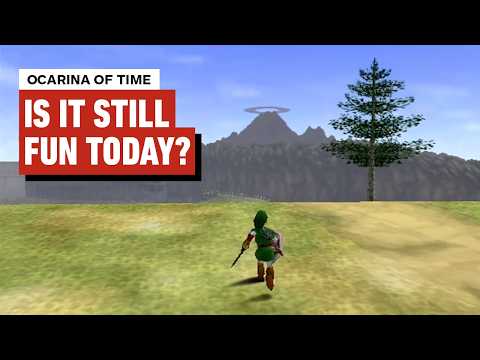 Reception and legacyOcarina of Time holds a Metacritic score of 99 from 22 reviews, the highest on the site, shared since Nov 18, 2026 with GTA 6, and Guinness World Records names it the most critically acclaimed videogame ever; it scored 40/40 in Famitsu and 10/10 at GameSpot and IGN, sold 7.6 million copies on the Nintendo 64 and won six AIAS awards including Game of the Year. The Nintendo Switch 2 remake of Nov 5, 2026 scores 96 on Metacritic from 87 critic reviews and 95 on OpenCritic, the best-reviewed game of 2026 until GTA 6's 99.
-
 SalesThe Ocarina of Time remake sold over 5.2 million copies worldwide in its first four days on Nintendo Switch 2, Nintendo said on Nov 11, 2026, the fastest start of any Nintendo-published Switch 2 game. That is 68% of what the 1998 Nintendo 64 original sold in its whole life, and more than any Switch 2 game but Mario Kart World had sold by Sep 30, 2026.
-
-
-
-
-
See also
-
 Water TempleThe Water Temple is the dungeon under Lake Hylia that adult Link clears with the Iron Boots, Zora Tunic and Hookshot, raising and lowering its water by playing Zelda's Lullaby at three Triforce marks; its mini-boss is Dark Link, its item the Longshot and its boss Morpha.
-
 Nintendo 64 original and re-releasesThe Legend of Zelda: Ocarina of Time first came out on the Nintendo 64 on Nov 21, 1998 in Japan and Nov 23, 1998 in North America, in three revisions (1.0, 1.1 and 1.2), and has since been re-released on GameCube, iQue Player, the Wii and Wii U Virtual Console and Nintendo Switch Online + Expansion Pack (Oct 25, 2021), before the Nintendo Switch 2 remake of Nov 5, 2026.
-
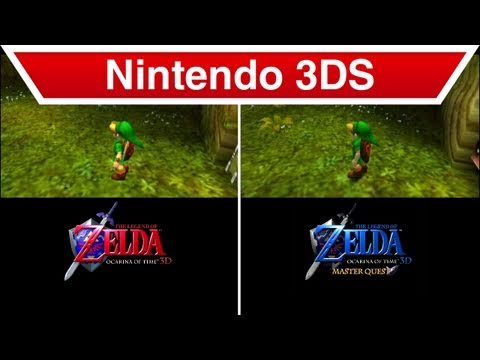 Master QuestMaster Quest is a harder version of Ocarina of Time with every dungeon rearranged, first planned as "Ura Zelda" for the Nintendo 64DD and released on GameCube as a bonus disc in 2002 and 2003; Ocarina of Time 3D (2011) includes it mirrored with double damage after the main quest. The Nintendo Switch 2 remake of Nov 5, 2026 does not include it, the launch reviews found; its replay extra is the Hall of Fallen Heroes, for boss and enemy rematches.
-
-
-