
 All vikis
Development history
Ocarina of Time was made by Nintendo EAD over about two and a half years, produced by Shigeru Miyamoto with five directors led by Toru Osawa, and released almost a year later than planned, on Nov 21, 1998, after moving from the Nintendo 64DD to a cartridge. Nintendo has not named a developer for the 2026 Nintendo Switch 2 remake, which series producer Eiji Aonuma presented.
The Legend of Zelda: Ocarina of Time was developed by Nintendo EAD and produced by Shigeru Miyamoto, with five directors rather than one: Toru Osawa, Yoichi Yamada, Eiji Aonuma, Yoshiaki Koizumi and Toshio Iwawaki. TheMentok's history of Sep 30, 2023 explains that Miyamoto, credited as producer and supervisor, was focused on directing Super Mario 64, so each director took charge of a different part of the game. Osawa, the oldest, acted as general director and wrote the script, Satoru Iwata's Iwata Asks interviews with the team record. Development took about two and a half years, and Miyamoto confirmed the game came out "almost a year" later than planned, on Nov 21, 1998 (Nintendo 64 original and re-releases). The music is Koji Kondo's. The Nintendo Switch 2 remake of The Legend of Zelda: Ocarina of Time, out since Nov 5, 2026, is presented by Aonuma, now series producer; Nintendo has not named a developer for it.
Quick facts
| Developer | Nintendo EAD |
| Executive producer | Hiroshi Yamauchi |
| Producer and supervisor | Shigeru Miyamoto |
| Directors | Toru Osawa (script; general director), Yoichi Yamada and Eiji Aonuma (game system; credited "Eiji Onozuka"), Yoshiaki Koizumi (3D system and character design), Toshio Iwawaki (program) |
| Cutscenes | Takumi Kawagoe and Naoki Mori |
| Dungeon design | Eiji Aonuma, Kenta Usui, Shinichi Ikematsu, Takeshi Hosono |
| Music | Koji Kondo |
| Supervisors | Takashi Tezuka, Toshihiko Nakago |
| Development time | About two and a half years; almost a year late (Iwata Asks) |
| Format | Planned for the Nintendo 64DD, released on a 32 MB cartridge |
| First shown | Shoshinkai 1995, as a short technical demo |
| Remake (2026) | Developer not named by Nintendo; presented by series producer Eiji Aonuma, with producer Hidemaro Fujibayashi |
From Zelda II to a 3D sword fight
Ocarina of Time grew out of a wish to bring the sword fighting of Zelda II: The Adventure of Link into 3D. Legendary Adventures' documentary of Nov 22, 2023 traces it back: Koizumi recalled in Iwata Asks that he had once worked with Miyamoto on Zelda II in polygons for the Super Nintendo, a thin polygon Link seen from the side, and kept "the desire to achieve a sword fighting Zelda game". He went on to the Super Mario 64 team and then rejoined Zelda, and Miyamoto said he developed Zelda 64 while working on Super Mario 64, swapping ideas between them.
The project began, Iwata said in Iwata Asks, "with the single theme of making a Zelda game that included chanbara-style swashbuckling", chanbara being Japanese samurai sword-fight films. Osawa and character designer Jin Ikeda started it as a team of two ("just the two of us!", Osawa recalls), Koizumi joined as the third, and it later involved nearly everyone at EAD. Before them, Takao Shimizu had made a chanbara demo video, which Aonuma remembers being shown at E3 in 1996.
The first sight of the game was a technical demo. HappehLemons' documentary of Apr 5, 2012 shows the clip Nintendo screened at its Shoshinkai show in 1995, when the console was still called the Nintendo Ultra 64, announced as the flagship game for the Nintendo 64DD disk drive. As HappehLemons notes, it was a demo of the hardware rather than footage of a game that yet existed. The first in-game footage of "Zelda 64" followed at Shoshinkai 1996.
From the 64DD to a cartridge
Ocarina of Time was designed for the Nintendo 64DD, a disk drive for large magnetic disks, and moved to a cartridge when the drive slipped. Legendary Adventures quotes Miyamoto telling Nintendo Power in November 1997 that "the playability of this game is more important than incorporating a writable feature", and Koizumi's account that the game simply did not work from the drive, because reading data from disk was too slow to even move Link. The 64DD reached Japan only in December 1999. The finished game shipped on a 32 MB cartridge, and Zelda Wiki says the switch helped delay it; the planned 64DD expansion, Ura Zelda, later became Master Quest.
Camera, first person and a fairy
Miyamoto first suggested a game played mostly in first person. Koizumi recalled that Miyamoto's idea was to walk around in first person and switch to a side view of Link only when an enemy appeared; Koizumi, who was building Link's model, admits he never tried a first-person scene even once because he "couldn't stand to see my Link not appear". First person survives only for aiming the slingshot, the bow and the Hookshot. Early builds also needed a button to jump; automatic jumping at ledges came later (Iwata Asks), and the remake brings a jump button back (What's new in the remake).
Z-targeting came from a trip to Toei Kyoto Studio Park, a film-studio theme park with live samurai and ninja shows. In Iwata Asks, Osawa describes a ninja lashing out with a kusarigama, a sickle on a chain, which the hero caught so that the chain pulled tight while the ninja circled him: the idea for an invisible tether that keeps Link and his target in view. Koizumi noticed that in staged sword fights the enemies attack one at a time while the others wait, which became the rule that locking onto one enemy holds the others back. Legendary Adventures notes that earlier games such as Tomb Raider had lock-on aiming, but Zelda Wiki notes that Ocarina of Time's Z-targeting and its context-sensitive action button carried into later 3D Zelda games and other series (Beginner's guide).
Navi began as a targeting marker. Koizumi did not want a plain upside-down triangle over the target, so he made a fairy and called it the "Fairy Navigation System"; Osawa named it Navi. Miyamoto's first plan was small, a game set mostly in Hyrule Castle, until he asked for a horse: Koizumi built one, the team made a grassland to ride it on, the grassland was cut for a time, and the staff campaigned to bring it back, which gave the game Hyrule Field and Epona. The idea of a young Link came up in about the second year of development (Iwata Asks).
Who made what
Iwata Asks spells out the roles. Koizumi handled 3D environments, the camera, Link, items and some events; Takumi Kawagoe made the cutscenes; Iwawaki was main programmer. Aonuma, a graphic designer who had never worked on Zelda, joined last and designed six of the early and mid-game dungeons and most of the enemies and boss battles. Haruhana modeled the characters other than Link, Satoru Takizawa the bosses and enemies, Miyanaga designed fields including Kokiri Forest and Hyrule Field, and Morita of SRD programmed the bosses and the fishing game, whose owner is modeled on a real fishing-shop owner near Neyagawa. The English script is by Dan Owsen. Miyamoto said the team built the systems first and fitted the story to the cartridge's memory.
Music and the ocarina
Koji Kondo, composer of the first Legend of Zelda, wrote the score. Legendary Adventures quotes Miyamoto on the central idea: make the ocarina a real instrument that plays real notes and use it, instead of a menu of magic spells, to make things happen in the world. Of the songs Link plays, 12 are Kondo's compositions and one, the Scarecrow's Song, is made up by the player. Some music fans credit to Ocarina of Time is older: Zelda's Lullaby first appeared in A Link to the Past.
The controller set the rules. 8-bit Music Theory's analysis of Sep 29, 2021 explains that the team found picking spells from a menu dull and gave the player an ocarina instead, chosen for its fit with Zelda and Miyamoto's love of world music, so that Kondo had to write 12 melodies from the five notes of the Nintendo 64's A and C Buttons (D, F, A, B and D), each easy to remember and distinct in character. The songs and where to learn them are on Ocarina songs.
Crunch and release
The last months were a scramble. Aonuma described Link's abilities changing midway, so mappers who had built rooms for the old settings had to rebuild them, and walls made of polygons let a fast-moving Link clip through; how long Link could stay underwater changed too, which meant reworking the Water Temple until the summer of 1998. Koizumi said Miyamoto wanted to be able to change cutscenes up to the day before completion. Ocarina of Time came out in Japan on Nov 21, 1998, and how it was received is on Reception and legacy.
The 2026 remake
Nintendo has not named the studio that develops the Nintendo Switch 2 remake. In Nintendo's demonstration of Sep 8, 2026, Eiji Aonuma, "producer of the Legend of Zelda series", says the team has been "developing a remake of this game for the series' 40th anniversary, creating a faithful interpretation using modern technologies", and that it has "a different appeal" from the go-anywhere design of Breath of the Wild. Later in the same video he says the loading screens between certain areas were "intentionally kept to preserve the essence of the original game". Grezzo, which made Ocarina of Time 3D in 2011, is not credited by any Nintendo source for the new game, and Digital Foundry noted on Sep 15, 2026 that the footage shows "none of the hallmarks of Unreal Engine 5".
A second producer appears in the full Direct. "I'm working as a producer alongside Mr. Aonuma on The Legend of Zelda: Ocarina of Time. My name is Hidemaro Fujibayashi," he says in The Legend of Zelda 40th Anniversary Direct of Sep 8, 2026, before presenting Zelda Notes, the remake's companion features in the Nintendo Switch App.
Frequently asked questions
Who made Ocarina of Time? Ocarina of Time was made by Nintendo EAD, produced by Shigeru Miyamoto with five directors (Toru Osawa, Yoichi Yamada, Eiji Aonuma, Yoshiaki Koizumi and Toshio Iwawaki) and music by Koji Kondo, and published by Nintendo in 1998.
Who directed Ocarina of Time? Ocarina of Time has five credited directors with separate roles: Toru Osawa (script, and general director), Yoichi Yamada and Eiji Aonuma (game system), Yoshiaki Koizumi (3D system and character design) and Toshio Iwawaki (program); Shigeru Miyamoto was producer and supervisor.
Was Ocarina of Time made for the 64DD? Yes: Ocarina of Time was first designed for the Nintendo 64DD disk drive and moved to a 32 MB cartridge as the drive was delayed, and its 64DD expansion, Ura Zelda, later became Master Quest.
Where did Z-targeting come from? Ocarina of Time's Z-targeting came from a team visit to Toei Kyoto Studio Park, where a ninja's sickle and chain inspired the tether between Link and his target and staged sword fights, with enemies attacking one at a time, inspired locking onto a single foe.
Who is making the Ocarina of Time remake? Nintendo has not named a developer for the Nintendo Switch 2 remake of Ocarina of Time, as of Oct 14, 2026; series producer Eiji Aonuma presented it, and Hidemaro Fujibayashi is a producer alongside him.
How long did Ocarina of Time take to make? Ocarina of Time took about two and a half years to develop, according to Iwata Asks, and came out almost a year later than first planned, on Nov 21, 1998.
Who composed the music of Ocarina of Time? Koji Kondo composed the music of Ocarina of Time, including 12 ocarina songs built from just five notes.
Sources
- Iwata Asks: The Legend of Zelda: Ocarina of Time 3D, Original Development Staff Part 1, Nintendo, read Oct 14, 2026
- Iwata Asks: Original Development Staff Part 1, chanbara, Nintendo, read Oct 14, 2026
- Iwata Asks: Original Development Staff Part 1, Z-targeting, Nintendo, read Oct 14, 2026
- Iwata Asks: Original Development Staff Part 1, Navi, Nintendo, read Oct 14, 2026
- Iwata Asks: Original Development Staff Part 2, Nintendo, read Oct 14, 2026
- Iwata Asks: Shigeru Miyamoto, Nintendo, read Oct 14, 2026
- The Legend of Zelda: Ocarina of Time/Credits, Zelda Wiki (community reference), read Oct 14, 2026
- The Legend of Zelda: Ocarina of Time, Zelda Wiki (community reference: 64DD, cartridge), read Oct 14, 2026
- The Legend of Zelda: Ocarina of Time (Nintendo Switch 2), Nintendo of America, read Oct 14, 2026
- The Legend of Zelda: Ocarina of Time - Mr. Aonuma Gameplay Demonstration, Nintendo of America, Sep 8, 2026 (video)
- The Legend of Zelda 40th Anniversary Direct 9.8.2026, Nintendo of America, Sep 8, 2026 (video)
- The History of the N64's Most Ambitious Game | Ocarina of Time, TheMentok, Sep 30, 2023 (video)
- The Development of Ocarina of Time, Legendary Adventures, Nov 22, 2023 (video)
- The History of Zelda: Ocarina Of Time (Documentary) |Part 1|, HappehLemons, Apr 5, 2012 (video)
- How Creative Limitations Shaped Ocarina of Time's Best Music, 8-bit Music Theory, Sep 29, 2021 (video)
- Zelda: Ocarina of Time Remake: The DF Tech Breakdown, DF Clips (Digital Foundry), Sep 15, 2026 (video)
Moments
The History of the N64's Most Ambitious Game | Ocarina of Time
TheMentok
The Development of Ocarina of Time
Legendary Adventures
- Ocarina of Time grew out of a wish to bring the sword fighting of Zelda II: The Adventure of Link into 3D. Legendary…
- Ocarina of Time was designed for the Nintendo 64DD, a disk drive for large magnetic disks, and moved to a cartridge…
- Miyamoto first suggested a game played mostly in first person. Koizumi recalled that Miyamoto's idea was to walk…
- Z-targeting came from a trip to Toei Kyoto Studio Park, a film-studio theme park with live samurai and ninja shows. In…
- Navi began as a targeting marker. Koizumi did not want a plain upside-down triangle over the target, so he made a…
- Koji Kondo, composer of the first Legend of Zelda, wrote the score. Legendary Adventures quotes Miyamoto on the…
- The last months were a scramble. Aonuma described Link's abilities changing midway, so mappers who had built rooms for…
The History of Zelda: Ocarina Of Time (Documentary) |Part 1|
HappehLemons
How Creative Limitations Shaped Ocarina of Time's Best Music
8-bit Music Theory
The Legend of Zelda: Ocarina of Time – Mr. Aonuma Gameplay Demonstration
Nintendo of America
The Legend of Zelda 40th Anniversary Direct 9.8.2026
Nintendo of America
Related
-
 Ocarina of Time 3DThe Legend of Zelda: Ocarina of Time 3D is the 2011 Nintendo 3DS remake of Ocarina of Time, developed by Grezzo with Nintendo and released on Jun 16, 2011 in Japan and Jun 19, 2011 in North America. It rebuilt the graphics at 30 frames per second and added gyro aiming, touch-screen items, Sheikah Stone hint videos, a Boss Challenge and a mirrored Master Quest.
-
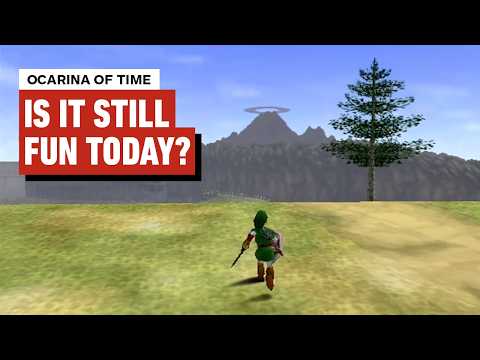 Reception and legacyOcarina of Time holds a Metacritic score of 99 from 22 reviews, the highest on the site, shared since Nov 18, 2026 with GTA 6, and Guinness World Records names it the most critically acclaimed videogame ever; it scored 40/40 in Famitsu and 10/10 at GameSpot and IGN, sold 7.6 million copies on the Nintendo 64 and won six AIAS awards including Game of the Year. The Nintendo Switch 2 remake of Nov 5, 2026 scores 96 on Metacritic from 87 critic reviews and 95 on OpenCritic, the best-reviewed game of 2026 until GTA 6's 99.
-
 SalesThe Ocarina of Time remake sold over 5.2 million copies worldwide in its first four days on Nintendo Switch 2, Nintendo said on Nov 11, 2026, the fastest start of any Nintendo-published Switch 2 game. That is 68% of what the 1998 Nintendo 64 original sold in its whole life, and more than any Switch 2 game but Mario Kart World had sold by Sep 30, 2026.
-
-
-
-
-
See also
-
 Nintendo 64 original and re-releasesThe Legend of Zelda: Ocarina of Time first came out on the Nintendo 64 on Nov 21, 1998 in Japan and Nov 23, 1998 in North America, in three revisions (1.0, 1.1 and 1.2), and has since been re-released on GameCube, iQue Player, the Wii and Wii U Virtual Console and Nintendo Switch Online + Expansion Pack (Oct 25, 2021), before the Nintendo Switch 2 remake of Nov 5, 2026.
-
-
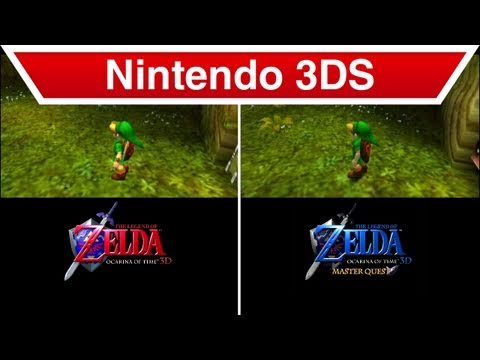 Master QuestMaster Quest is a harder version of Ocarina of Time with every dungeon rearranged, first planned as "Ura Zelda" for the Nintendo 64DD and released on GameCube as a bonus disc in 2002 and 2003; Ocarina of Time 3D (2011) includes it mirrored with double damage after the main quest. The Nintendo Switch 2 remake of Nov 5, 2026 does not include it, the launch reviews found; its replay extra is the Hall of Fallen Heroes, for boss and enemy rematches.
-
-
-